
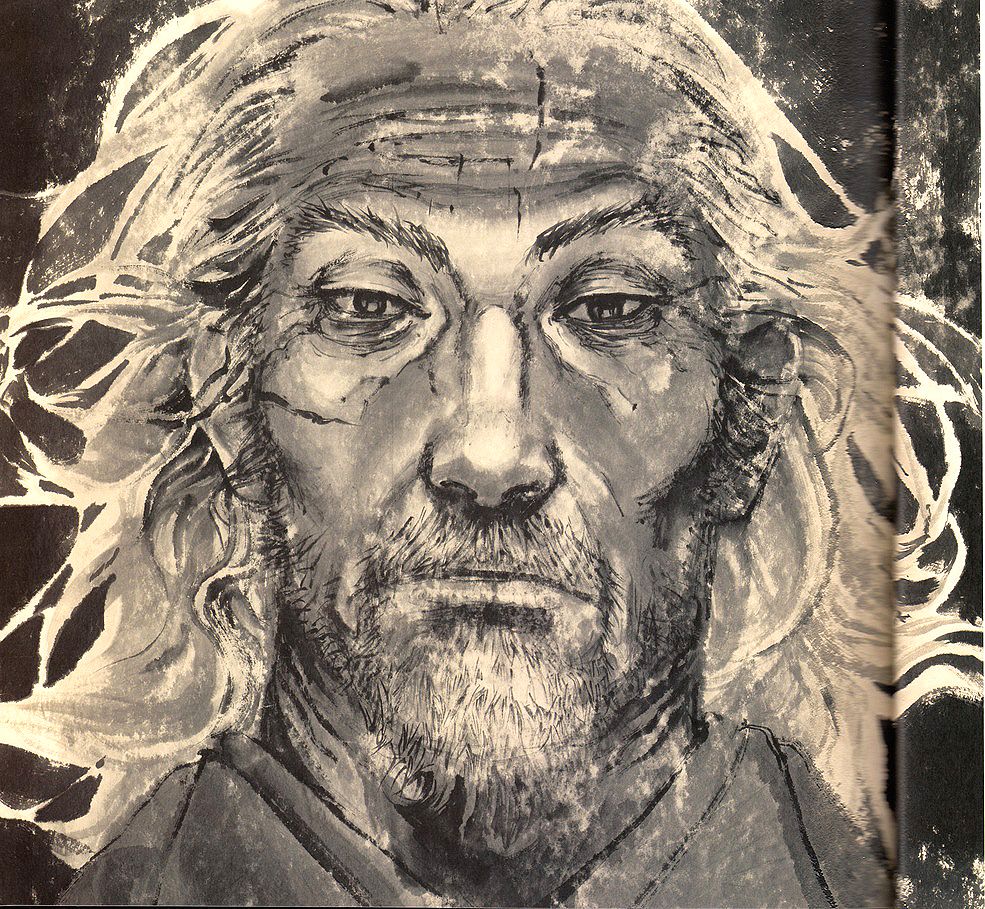
A traveled man holding a canvas and a few paintbrushes traipses towards the Reigando Cave. As his wooden sandals shuffle through the sand, drops of dew fall from the rockface above him, mostly merging softly into the ground. One slices through the air, bursting onto the old man’s hair — which sits atop his head unruly and wild like a burning thistle in the desert. The old man looks up.
He closes his eyes, taking in a deep and vast breath. Another droplet tumbles through the air, locked onto a direct path to his forehead. Just as the water threatens to splash across his face, the old man exhales sharply. The droplet sprays through the air, exploding in all directions, all ways of movement.
The man holds his hand out, palm facing him, and descends into the cave with a pace as steady as the Okinawa tide in wintertime. He walks until the light behind him has faded, until he can hear the sound of those chilling waves colliding ashore, water dancing with sand before pulling away like a widow’s lost embrace. It’s only the echo of the cave and his ears, of course. He walks until he can’t see his hand anymore.
It is here, in the pit further than darkness that the old man puts down his tools. He props up the canvas in front of him. He sets down his brushes and his ink tray. Then, he sits and he starts to paint.
 Just Writing